

"Ecological in the Deepest Sense"
Protecting connective labor in the age of artificial intelligence.

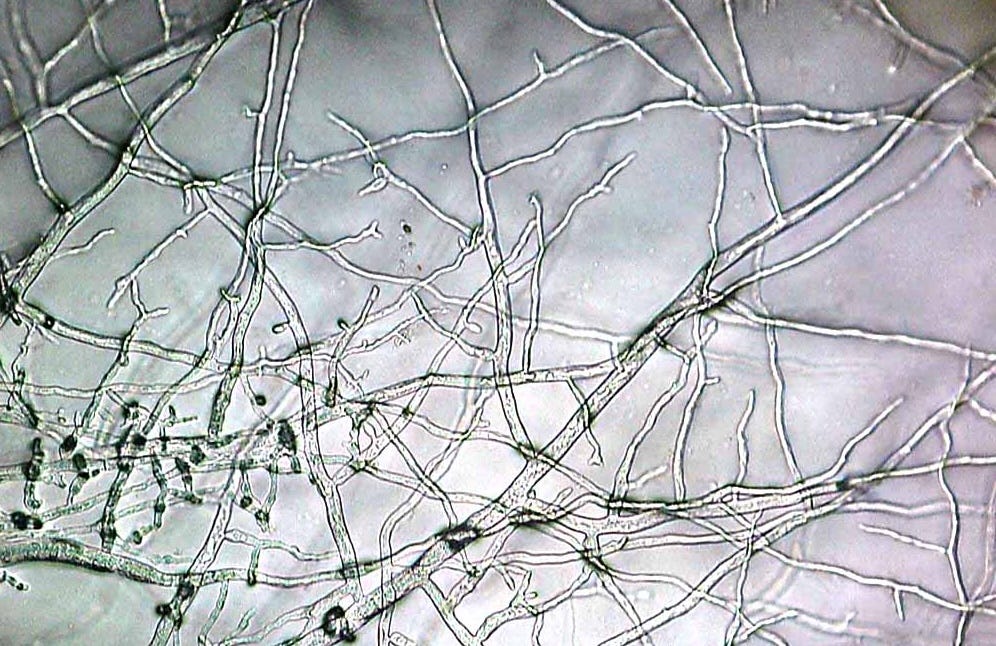

I spend most of my working life talking with two distinct groups of people: journalists and conservationists. No matter where these conversations start, more and more of them are drifting toward the subject of artificial intelligence, drawn from every direction into the same vortex.
Like almost everyone else I know, the journalists and conservationists I talk to are annoyed by the uninvited appearances of AI in their daily lives, and seriously worried about its expanding effects on education, the climate, and society at large. But they also express a more profound dread, one I share but don’t always hear described by people in other fields. I think it’s worth paying attention to, in part because it can show us a way forward.
Journalism and conservation both involve what sociologist Allison Pugh calls “connective labor,” work that forges emotional understandings with others in order to accomplish its goals. In her illuminating book The Last Human Job, she explains that while connective laborers pay close attention to others, connective labor isn’t a one-way practice; it’s a series of collaborations that, relationship by relationship, helps weave our social fabric.
Journalists, at our best, carry out connective labor with our sources — even when those connections are antagonistic — and with the audiences we report to. Conservationists, at their best, carry out connective labor with the human communities they serve, and with other forms of life as well. (Not for nothing does a friend of mine call his work “conversation biology.”)
Through interviews with chaplains, teachers, hairdressers, doctors, and others, Pugh finds that connective labor confers dignity, purpose, and self-understanding on both practitioners and recipients. “Yet it is work that is essentially invisible, only partially understood, and not usually recognized, reimbursed, or rewarded, despite its ubiquity and importance,” she writes.
Though connective laborers and those they serve do benefit from some kinds of standardization, Pugh finds, the work is essentially artisanal, as every relationship has to be built from scratch. And artisanal means expensive. So corporate interests have long tried to reduce the cost of connective labor, starving it of the time and other resources it requires and attempting to replace it, in whole or part, with technology.
Journalists have been subjected to this squeeze for decades, with disastrous results for our careers, our audiences, and public discourse. Conservationists who work for nonprofit organizations, or in academia or government, have been less directly affected by corporate cost-cutting. But they, too, are suffering from growing workloads, shrinking job markets, and the burnout that results from trying to connect in circumstances that make connection impossible.
AI technologies provide corporations with yet another opportunity to assign connective labor to machines. This time, the machines can put on a pretty convincing performance of connection, but by definition, they can’t engage in the two-way relationships that connective laborers build. This, I think, is the main source of journalists’ and conservationists’ shared dread — the very real possibility that we will be replaced by technologies that can more or less simulate what we do, but can’t accomplish the work. We know what would be lost, and we know how much that loss would matter.
I think this fear also underlies journalists’ outrage about recent cases of other journalists using AI to circumvent the job’s connective labor; the willingness to fake connection feels like a betrayal of the whole craft.
While all this is terrifying, it’s also clarifying. The challenge for both journalists and conservationists isn’t to hide from AI or quixotically try to drive it into oblivion, but to find and create ways to keep practicing connective labor — and demonstrating its many benefits.
This week, Pope Leo XIV released Magnifica Humanitas, an encyclical letter that calls for the “disarming” of AI. “To disarm does not mean rejecting technology, but preventing it from dominating humanity,” the Pope states. Nathan Schneider, a professor of media studies at the University of Colorado, Boulder, compares this papal call to the 1891 encyclical published by the previous Pope Leo, which warned against the excesses of the Gilded Age and set the stage for the New Deal. “Just as during the Industrial Revolution, a more just future begins with workers resisting against the abuses of the present,” Schneider writes, adding that worker demands for dignity in the face of AI are helping to shape new businesses and policy experiments.
The current Pope Leo describes the undertaking ahead in striking terms:
Our task today is not only ethical or technical. It is ecological in the deepest sense, for it concerns a new dimension of our common home. AI is already an environment in which we are immersed, as well as a force with which we must engage. For this reason, merely regulating it is insufficient; it must be disarmed, welcoming and accessible.
“Disarmed, welcoming, and accessible” AI technologies could ease any number of tasks for both journalists and conservationists. Data journalists, frontline conservationists, and conservation scientists are already putting narrow forms of machine learning to work in creative ways. I’m genuinely enthusiastic about AI applications that can help document the effects of conservation measures, serve as a “tireless, methodical reader” of underused archives, and otherwise advance conservation research. But the core work of tending our common home is, as Pope Leo writes, ecological in the deepest sense. It’s about strengthening, repairing, and protecting connections among the living, and it’s a human job.
Conservation at Work
Thanks for the thought-provoking responses to “Conservation Is Not a Failure,” my post about ecologist Stuart Pimm’s call for more consistent measurement of what works in conservation. “True, one of the biggest frustrations in conservation is how hard it is to secure funding for long-term management and monitoring,” commented Carrie Starbuck of The Nature of Things. “Everyone wants to fund the exciting habitat creation. Far fewer want to fund the long-term management and monitoring needed to keep those habitats thriving and understand whether they’re actually working.” WILDLABS has established a “Boring Fund” to support the “foundational elements of conservation technology work” such as maintaining digital infrastructure and updating documentation. Where’s the philanthropist willing to support audacious acts of monitoring?
John Reid, founder and former president of the Conservation Strategy Fund, calls for a return to “an environmentalism of places” (and kindly quotes me on the subject) in this recent Atlantic essay. “Decarbonization is a necessary environmental goal, but letting it overshadow more relatable ecological causes is a strategic blunder,” he writes.
“Conservation was designed to be impressive at birth, not resilient across political seasons,” writes marine conservation biologist Rick MacPherson in The Revelator. “Durability is the real design challenge.” (Among many other enduring pursuits, Rick is the organizer of Ocean Hoptimism, a monthly gathering of ocean enthusiasts at Faction Brewing in Alameda, California. If you live in the Bay Area, stop by for a pint.)
Can an ecosystem really “fail”? If so, who is it failing? John Drake, an ecologist who also trained as a philosopher, digs into the assumptions underlying ecosystem “malfunction” and “failure” in this essay for Aeon.
Finally, I’ve been entranced by Ada Limón’s new book Against Breaking, an adaptation of her closing lecture as U.S. Poet Laureate. During her service from 2022 to 2025, Limón led the Poetry in Parks initiative, which affixed panels of poetry on picnic tables in seven national parks. Given the Trump administration’s recent attacks on the Park Service, Limón’s choice to attach the poems to heavy furniture was prescient.
The current administration has succeeded in squelching globalchange.gov, the website that provided public access to the National Climate Assessments, but thanks to the efforts of former NASA staffers, the assessments — along with “Startlement,” the opening poem that Limón wrote for the Fifth National Climate Assessment — are available at climate.us.
The world says, What we are becoming, we are
becoming together.The world says, One type of dream has ended
and another has just begun.The world says, Once we were separate,
and now we must move in unison.