

How Does Your Garden Grow?
Gardening, like conservation, is as varied as the people who practice it.

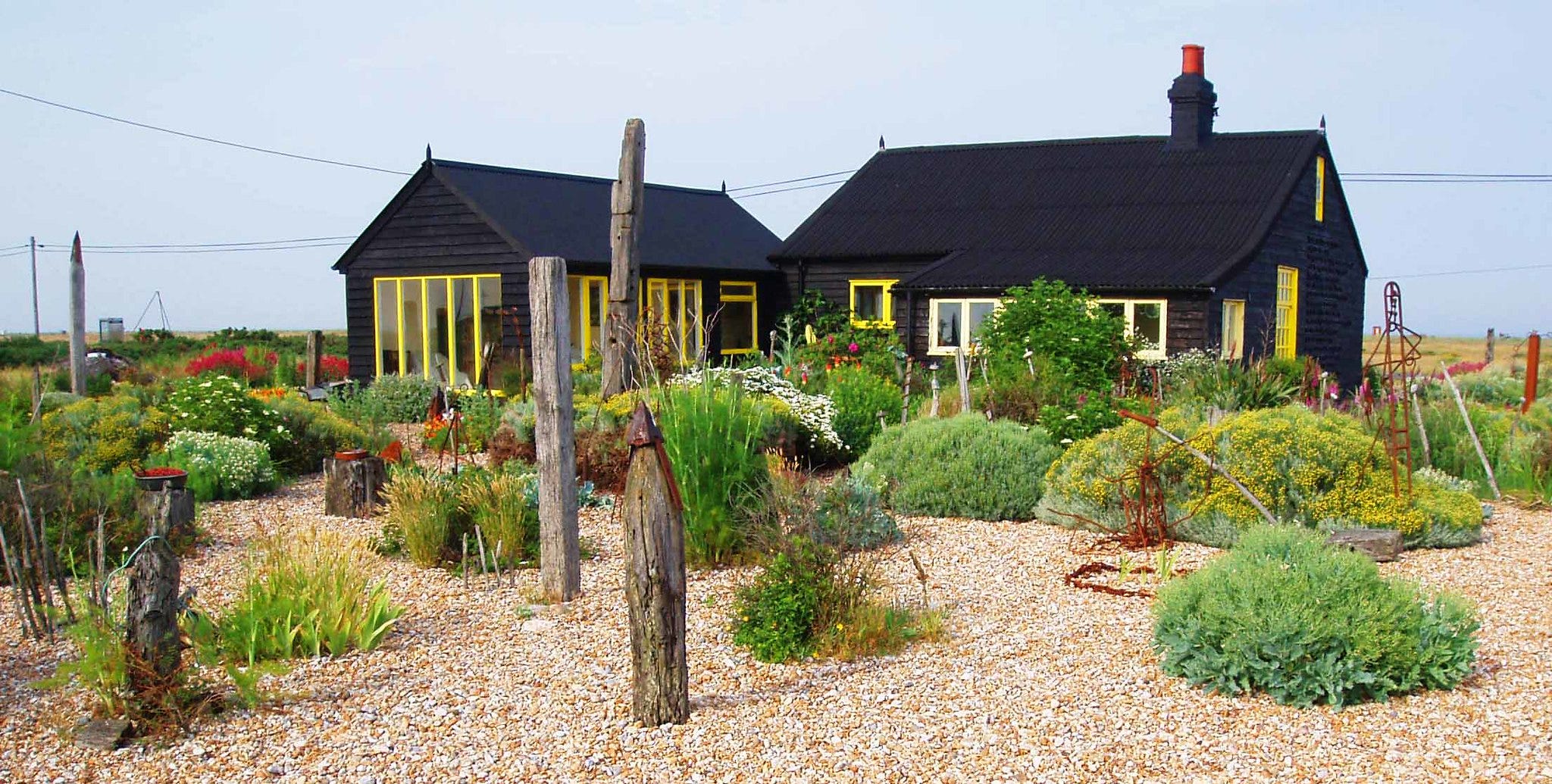
I’ve spent the last few cold, dark, damp evenings escaping into Olivia Laing’s wonderful The Garden Against Time, which is both a pandemic memoir and a meditation on the meaning of gardens. During the first months of lockdown, Laing — an herbalist by training and cultural critic by profession — took on the rehabilitation of a Royal Horticultural Society partner garden on the southeastern English coast. “I would restore it, I told myself, but I would also trace how it had intersected with history, as even the smallest garden invariably must, since every plant is a traveler in space and time,” she writes.
As Laing delves into the history of her garden, and of gardens in general, she finds the best and worst of humanity. Near her new home is Shrubland Hall, an estate whose elaborate landscaping laundered the profits of Caribbean slave plantations. The lush and lively gardens of 19th-century designer William Morris, meanwhile, expressed both his aesthetic vision and his curiously individualistic utopianism. The cottage garden of filmmaker and artist Derek Jarman, planted in the mid-1980s after Jarman was diagnosed with HIV, took shape in the shadow of the Dungeness nuclear power stations, battered by English Channel storms. A work of art and place of solace, Laing writes, it “continually undid the distinction between cultivated and wild that a garden is meant to proclaim.”
Conservation and restoration are sometimes described as kinds of gardening, but the metaphor is controversial: as Laing suggests, gardens are popularly understood to be cultivated bulwarks against the wild, walled off from both other species and less privileged humans.
But as The Garden Against Time makes clear, gardens are as varied as their gardeners. Those who embrace the conservation-as-gardening metaphor, including Michael Pollan and my friend Emma Marris, argue that it usefully reflects the extent of human influence on the planet and the fact that conservation, like gardening, is always undertaken by people.
Gardens don’t need to be showcases of human control, but they are shaped by human decisions. The same is true of conservation. Both conservation and gardening can be exclusive, exploitative, and ignorant of their ecological and cultural contexts. Their practitioners can impose hard boundaries where none are needed, or cater to fantasies of conquest and self-sufficiency.
Conservationists and gardeners can also approach their work with humility, aiming to revive broken ecological relationships and right historical wrongs. They can use boundaries and other tools of their trades with discernment, aware that each of their undertakings is unique.
Laing, reflecting on the agonies that built Shrubland Hall, doesn’t regret the decline of its grounds: “There are better ways to make a garden,” she writes. There are worse and better ways to practice conservation, too. The endless variety of gardens, and their gardeners, can remind us that we always have a choice.
Conservation at Work
While many of us were watching the U.S. election as if we were the British public in the first episode of Black Mirror, the United Nations Biodiversity Conference in Cali, Colombia, ended with little fanfare and no agreement to mobilize the funding needed for biodiversity protection. (I recently wrote about the conspiracy theorists who persuaded Congress to keep the U.S. on the sidelines of these negotiations.) The delegates in Cali did, however, establish a new subsidiary body designed to strengthen the role of Indigenous peoples in future negotiations and approve an innovative plan to raise money for conservation from companies that have profited from the genetic data of free-living plants, animals, and microbes.
There were a few bright spots for conservation and climate protection in the U.S. election results, including in my home state of Washington. See these useful rundowns from Grist, the Trust for Public Land, and the Nature Conservancy.
On Friday, the United Nations Environment Programme released a set of core human rights principles for conservation organizations and funders, aimed at ending the continuing abuses of “fortress conservation.” Law professor John Knox, in The Conversation, describes how the principles were developed and why they’re so needed.
Two heartening examples of collaborative, place-savvy work yielding major long-term benefits for conservation: the removal of the Wildboy Creek Dam from the Washougal River in Washington State by the Cowlitz Indian Tribe and Columbia Land Trust and the expanding protections for the Dugdown Mountain Corridor in Georgia.
A thought-provoking study in Conservation Letters found that individual relationships across community boundaries helped motivate collective action on behalf of a shared fishery. “Long-distance relationships may be a useful foundation upon which to build conservation efforts that cross community boundaries and bolster sustainable resource use,” the authors write. (This study brought to mind “Against Community,” an excellent essay by my colleague Raksha Vasudevan at Stranger Ties.)
Trends in Ecology and Evolution is out with its annual “horizon scan” of emerging issues in conservation, which include macroalgae as a new source of critical minerals and the potential effects of offshore wind development on ocean processes.
The Sierra Nevada yellow-legged frog was nearly driven extinct in the early 2000s by Batrachochytrium dendrobatidis (Bd), the fungal disease that’s decimated frog populations worldwide. But a few populations of yellow-leggeds survived, and in November, ecologist Roland Knapp and colleagues reported that when they translocated individual survivors to areas still infected with Bd, the frogs re-established healthy populations. This is one of several recent indications that in some places, frogs may be able to recover from the three-decade-long devastation of the Bd plague. Very good news for frogs and those of us who like them.
Finally, I’ve especially appreciated these recent Substack posts: the “Owl in America” series by environmental lawyer Rebecca Wisent, a daily report on conservation in the style of Letters from an American; this essay on the importance of the humanities by Adam M. Sowards and this report by Jonathan P. Thompson on a science conference that takes the humanities seriously; a look at analog and digital technologies of resistance to authoritarian regimes by Ruth Ben-Ghiat; a reflection on the living communities of old stone walls by Richard Conniff; some precious “Amulets Against the Spirits of the Age” from L. M. Sacasas of The Convivial Society; and this essay by Chris La Tray, in which he writes:
I want to say that I think we are in for a long and difficult stretch here, one in which recovery … probably won’t happen in my lifetime. Those of us who can really need to operate in real world, face-to-face contexts, and get away from our stupid screens and devices where we are just constantly shouting into a breathless void. No one is going to save us but ourselves, so take some risks. Think critically. Pick a cause outside of the establishment and devote yourself to it. Maybe you’re a diehard Democrat; take the time to really listen to the people who feel abandoned by them. Recognize the places where you can exert a little influence and exert it, even at the risk of comfort and lost relationships. Otherwise we can, and should, expect the worst.
Thank you Michelle for a thought provoking and informative piece. I am encouraged by the growing alignment to conservation and practices that honor nature's cycles.
Michelle, I read One Garden Against the World a few months ago (Kate Bradbury) and for a minute, I thought you were speaking of that book in this post! Now that I've figured out that you're describing a different book, I'm excited to add it to my list for 2025. Thanks. And thanks for mentioning my series, too! Glad it's bringing something useful your way. :)